

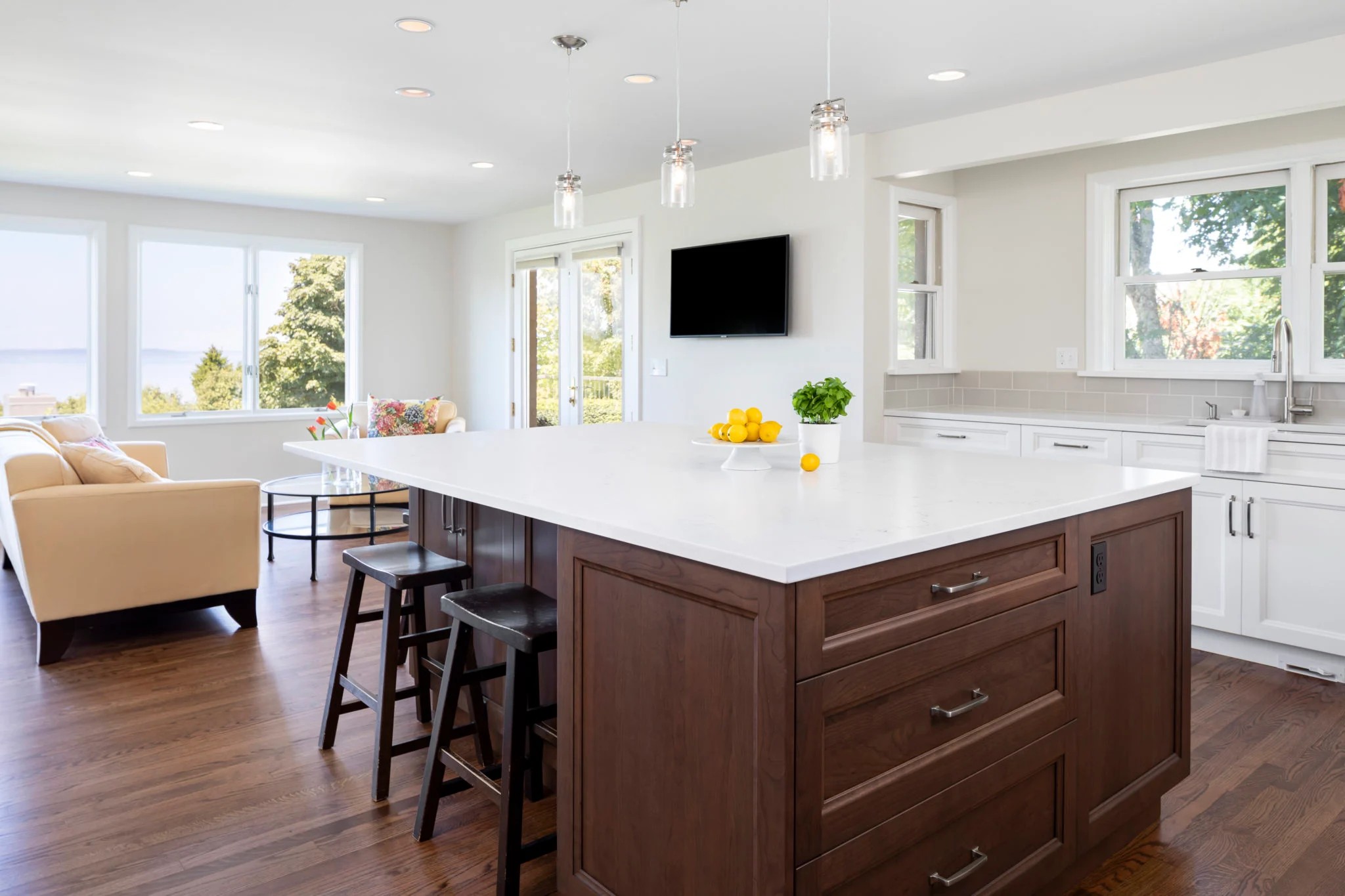
Before you remove a wall using a remodeling company for an open concept, you’ll confirm whether it’s load-bearing by checking joist/truss direction, alignment with walls above/below, and attic/basement signs like doubled plates, headers, posts, and point loads, then verify with stamped calculations if needed. You’ll also map wiring, plumbing vents, and HVAC runs with scanning and small inspection cuts. If it’s structural, you’ll design a beam/post load path to proper bearing and footings, then plan permits, inspections, and finish repairs. Keep going for the full checklist.
Is It a Load-Bearing Wall? How to Tell
Before you plan to remove any wall in an open-concept renovation, confirm whether it’s load-bearing, as that detail determines the required structural design, permits, and inspections. Start by checking the framing direction: if the ceiling joists or trusses are perpendicular to the wall, it’s a strong indicator. In multi-story homes, align the wall with beams, columns, or walls above and below; stacked load paths rarely happen by accident. In attics or basements, look for doubled top plates, built-up headers, posts, or point loads landing on girders or footings. Don’t trust wall removal myths like “it’s thin, so it’s nonstructural” or “it’s parallel to joists, so it’s safe.” Your load-bearing considerations should be verified by stamped calculations.
What’s in the Wall (Wiring, Plumbing, HVAC)?
Where do the circuits, pipes, and ducts actually run when you open up that “simple” partition? You verify before demolition: scan with a stud/metal detector, cut inspection ports, and map each run to its panel, fixture, or register. For wiring considerations, you’ll identify NM vs conduit, box fill, splice accessibility (no buried junctions), required GFCI/AFCI protection, and whether the wall carries multi-wire branch circuits that demand handle-tied breakers. If you find plumbing, you’ll confirm venting, slope, and cleanout access, then plan a code-compliant plumbing reroute that preserves trap-arm limits and protects piping from fasteners with nail plates. For HVAC, you’ll check for returns, fireblocking, and duct sizing so airflow stays balanced and quiet.
Open Concept Support Options: Beams, Posts, Spans
Once you confirm a wall is load-bearing, you’ll choose a support strategy that matches the span, the loads above, and how much structure you can hide in the ceiling: a flush beam (often LVL/steel) framed into joists, a drop beam that preserves existing framing depths, or a shorter beam with one or more posts to reduce the span. Your engineer should size members per code live/dead loads, tributary width, bearing length, and deflection limits (often L/360). For beams vs. posts, remember that posts concentrate reactions, so verify continuous load paths to a footing or an upgraded slab. Evaluate spans versus supports early: longer clear spans push you toward deeper LVL/steel, while added posts let you use smaller members and simpler connections. Specify hangers, bolts, and fire protection as required.
After the Wall: Floors, Ceilings, and Lighting Fixes
After the wall comes down, you’ll shift from structural work to finish repairs that still have code implications: patching subfloor and flooring transitions at the former partition line, rebuilding the ceiling plane around the new beam (flush or dropped) with proper fastening and fire-rated assemblies where required, and reworking lighting and electrical runs that were previously routed through the wall. Expect after effects: uneven slab height, joist crowns, or squeaks exposed by the demo. You’ll level, then select floor finishes that meet wear, moisture, and deflection limits, and detail clean transitions without trip edges. Overhead, you’ll blend ceiling textures, maintain the required gypsum thickness, and seal penetrations. For lighting, you’ll reroute cable in compliant zones, add recessed-rated housings where insulation contacts, and rebalance circuits for new switching layouts.
Permits, Inspections, and the True Project Cost
Finish work may look cosmetic, but inspectors still treat flooring patches, ceiling assemblies around the beam, and rerouted wiring as permitable scope—and that’s where your schedule and budget can swing. Pull the right permits early: structural for beam posts and footings, electrical for new circuits and boxes, mechanical if you move ducts, and plumbing if you touch venting. Submit stamped drawings when required, and match load paths, fastener schedules, and fireblocking details to local code. Expect rough-in and final inspections; don’t close ceilings before sign-off. Common permitting pitfalls include unreported relocations, undersized headers, and missing smoke/CO upgrades. Your true cost includes plan review fees, engineering, re-inspections, temporary shoring, and access openings—classic budgeting surprises.
Conclusion
Before you swing the sledgehammer, you verify whether the wall is load-bearing, locate electrical, plumbing, and HVAC runs, and select code-compliant support (sized beam, proper bearing, posts, and span limits). You then plan to patch the subfloor and ceiling planes and update the lighting layouts. You pull permits, schedule inspections, and budget for engineering, demo, temporary shoring, and finishes—because you can’t cut corners without paying for it later.