
A damaged sidewalk can seem like a minor issue at first. One small crack, a raised edge, or a sunken section may not feel urgent. Over time, however, worn concrete can become a safety hazard, affect curb appeal, create drainage problems, and even expose property owners to liability concerns.
For homeowners, landlords, business owners, and property managers, knowing when to repair a sidewalk and when to replace it can save money and prevent bigger problems. This guide explains the most common signs that replacement may be needed, what affects the cost, how the work is typically done, and how long the project may take.
When Should a Concrete Sidewalk Be Replaced?
Not every crack means the entire sidewalk needs to be removed. Some minor surface cracks can be repaired, especially if the concrete is still level and structurally sound. Replacement becomes the better option when the damage affects safety, stability, drainage, or long-term performance.
A sidewalk should be evaluated for replacement when it has multiple broken sections, deep cracks, uneven slabs, sinking, major surface scaling, or areas that collect water. If the concrete has shifted enough to create a trip hazard, patching may only provide a temporary fix.
Homeowners often begin searching for concrete sidewalk replacement near me when the walkway becomes unsafe, unattractive, or difficult to maintain. At that point, a professional inspection can help determine whether repair or full replacement is the smarter investment.
Common Signs You Need Sidewalk Replacement
Large or Spreading Cracks
Hairline cracks are common in concrete, but wide cracks are different. If cracks continue to spread, form uneven edges, or appear across multiple sections, the sidewalk may have deeper structural issues. These cracks can allow water to enter, freeze, expand, and make the damage worse.
Uneven or Lifted Slabs
Raised concrete is one of the most common sidewalk hazards. Tree roots, soil movement, poor drainage, and freeze-thaw cycles can push sections upward or cause them to sink. Uneven slabs are especially risky near entryways, driveways, public walkways, and rental properties.
Pooling Water
Water should drain away from sidewalks, not sit on top of them. Standing water can weaken the surface, stain the concrete, and contribute to erosion around the walkway. If puddles appear after every rainfall, the slope or base may need correction during replacement.
Crumbling Edges or Surface Scaling
Concrete that flakes, crumbles, or breaks apart may be deteriorating due to age, weather exposure, salt, poor installation, or weak surface finishing. Once the surface begins to fail in several areas, resurfacing may not be enough.
Repeated Repairs
If the same sidewalk has been patched several times, replacement may be more cost-effective. Multiple repairs can create an uneven appearance and may not solve the underlying problem.
What Causes Sidewalk Damage?
Concrete is strong, but it is not immune to movement, moisture, and pressure. Common causes of sidewalk damage include poor soil compaction, tree root growth, water drainage issues, heavy loads, harsh winter conditions, deicing salts, and natural settling.
In some cases, the sidewalk fails because the base was not properly prepared during the original installation. A strong concrete walkway depends on more than the top layer. The soil, gravel base, thickness, slope, joints, and finishing all affect how long the sidewalk will last.
How Much Does Concrete Sidewalk Replacement Cost?
The cost of replacing a sidewalk depends on several factors. The size of the project is usually the biggest one. A short walkway from the driveway to the front door will cost less than a long sidewalk running along a property line or commercial frontage.
Other cost factors include:
- Thickness of the new concrete
- Demolition and removal of old concrete
- Site access for equipment
- Soil or base correction
- Tree root interference
- Drainage improvements
- Reinforcement needs
- Permits or local requirements
- Decorative finishes or custom layouts
A basic replacement is generally more affordable than a project that requires grading, drainage correction, or connection to other concrete features. If the sidewalk is part of a larger exterior upgrade, the contractor may also evaluate nearby steps, curbs, driveways, patios, or retaining walls.
For example, some Bergen County properties may need sidewalk work along with slope support or erosion control. In that case, a homeowner may also consider a concrete retaining wall in Bergen County NJ to improve stability and manage changes in elevation.
Concrete Sidewalk Replacement Process
A professional sidewalk replacement project usually follows a clear step-by-step process.
1. Inspection and Measurement
The contractor inspects the damaged area, measures the sidewalk, checks the slope, and identifies possible causes of failure. This step helps determine whether replacement is necessary and what preparation is needed.
2. Removal of Old Concrete
The existing sidewalk is broken up and removed. Proper disposal is important because old concrete can be heavy, messy, and difficult to handle without the right equipment.
3. Base Preparation
The ground is leveled and compacted. If needed, a gravel base is added to improve drainage and stability. This step is one of the most important parts of the project because weak base preparation can lead to future cracking or sinking.
4. Forming and Layout
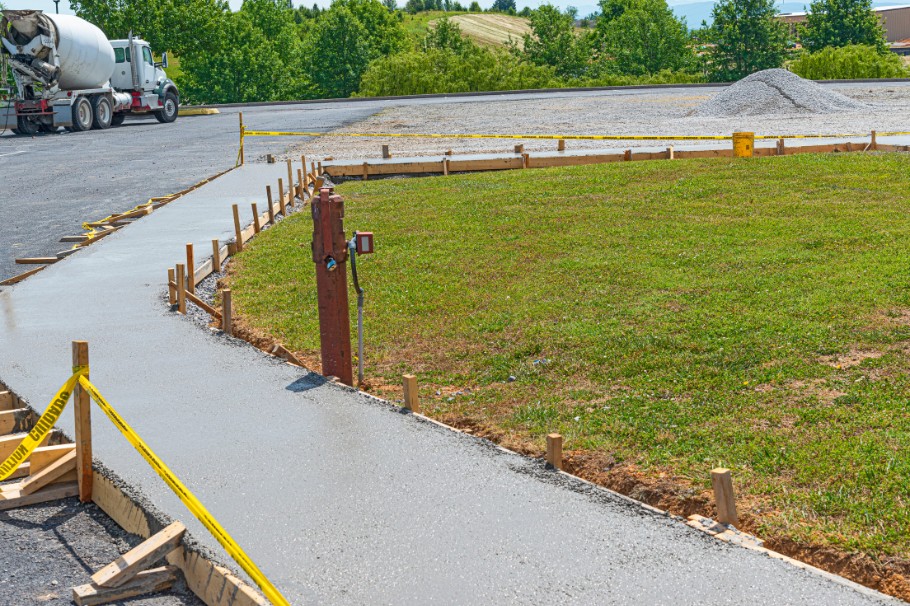
Wood or metal forms are placed to define the shape and edges of the new sidewalk. The contractor also checks the slope so water drains properly away from the home, driveway, or building.
5. Pouring the Concrete
Fresh concrete is poured into the prepared forms, spread evenly, and leveled. Depending on the project, reinforcement may be used for added strength.
6. Finishing and Control Joints
The surface is finished for the desired texture. Many sidewalks receive a broom finish to improve traction. Control joints are added to help guide natural cracking and reduce random breakage.
7. Curing and Protection
Concrete needs time to cure. The sidewalk should be protected from heavy use, harsh weather, and unnecessary pressure during the early curing period. Proper curing helps the concrete reach better strength and durability.
How Long Does Sidewalk Replacement Take?
The timeline depends on project size, weather, site conditions, and curing requirements. Many residential sidewalk replacement projects can be completed in a few days, but the concrete still needs time before it is ready for regular use.
A simple project may involve one day for removal and preparation, one day for pouring and finishing, and additional curing time before foot traffic or heavier loads are allowed. Larger projects, difficult access, poor soil, drainage corrections, or permit requirements can extend the schedule.
Weather also matters. Heavy rain, freezing temperatures, or extreme heat can delay concrete work or affect curing. A reliable contractor will plan the project around proper installation conditions instead of rushing the process.
Repair vs. Replacement: Which Is Better?
Repair may be enough when damage is minor, limited to the surface, and the sidewalk remains level. Replacement is usually better when the concrete is uneven, deeply cracked, sunken, lifted, or failing in multiple areas.
A helpful way to decide is to think about the cause. If the issue is only cosmetic, repair may work. If the issue involves movement, drainage, weak base material, or safety hazards, replacement is often the stronger long-term choice.
How to Make a New Sidewalk Last Longer
A properly installed concrete sidewalk can last for many years with basic care. Keep the area clean, remove leaves and debris, avoid harsh chemicals when possible, and address drainage problems early. If trees are nearby, monitor root growth and watch for lifting sections over time.
It is also smart to inspect the sidewalk after winter or heavy storms. Small issues are easier to manage before they turn into major cracks, settling, or trip hazards.
Why Homeowners Choose KRR General Contractor
Sidewalk replacement requires more than pouring new concrete into an empty space. The finished walkway should be safe, properly sloped, visually clean, and built on a stable base. KRR General Contractor helps homeowners and property owners improve damaged exterior concrete with practical planning, professional workmanship, and attention to long-term performance.
Whether the goal is to remove a hazard, improve curb appeal, prepare a property for sale, or upgrade an aging walkway, the right installation can make the property safer and more attractive.
Key Takeaway for Property Owners
A damaged sidewalk should not be ignored. Cracks, uneven slabs, pooling water, and crumbling concrete can create safety risks and reduce the appearance of your property. Replacement may cost more upfront than a quick patch, but it often provides better value when the existing concrete is no longer stable.
Before starting the project, ask about base preparation, drainage, concrete thickness, curing time, and whether nearby exterior features may also need attention. A well-planned sidewalk replacement gives you a cleaner, safer, and longer-lasting walkway that supports both function and curb appeal.