

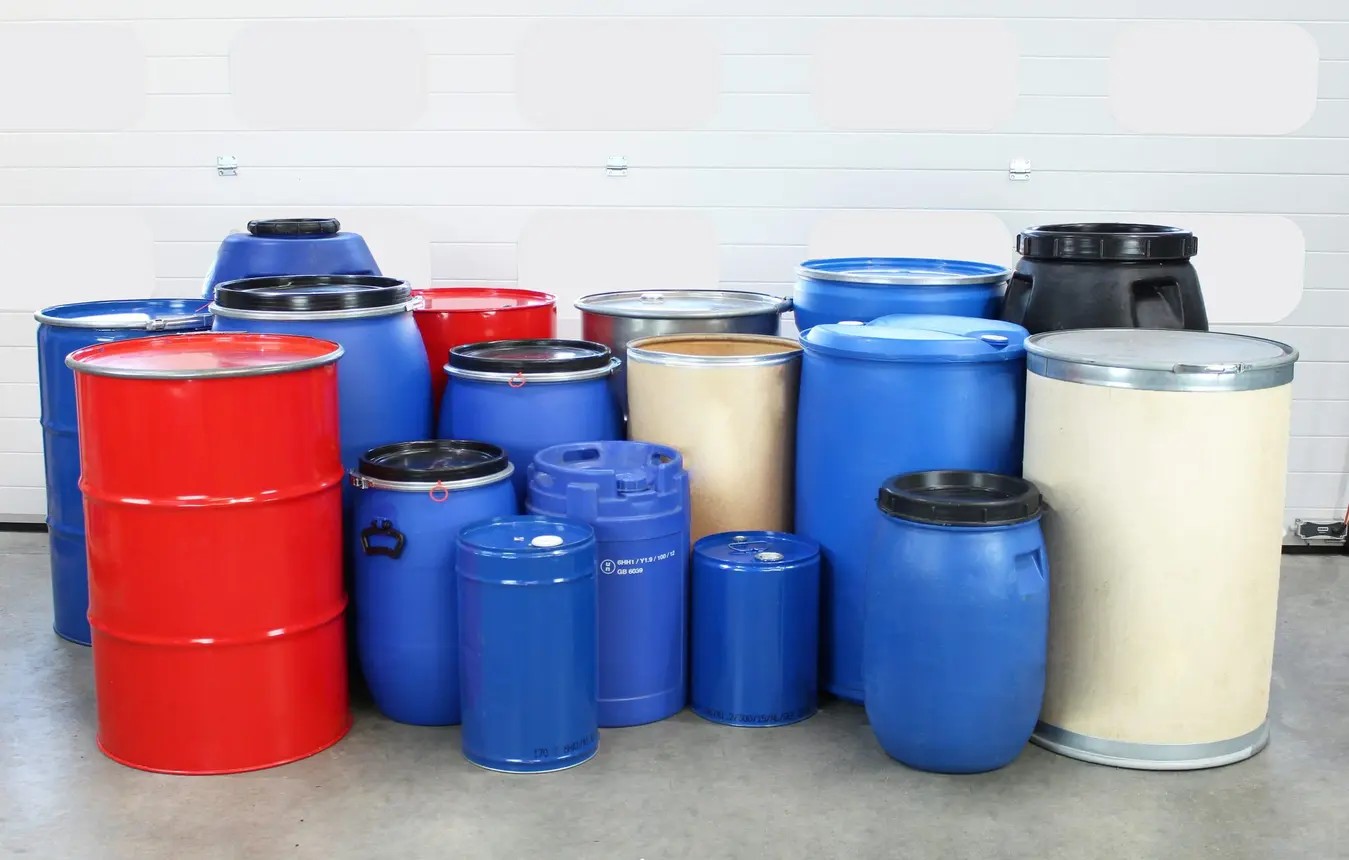
Just going into the drum and doing manual handling has always been risky. By 2026, it had gone from dangerous to a definitive safety failure. Due to stricter workplace standards, the availability of better equipment, and the increase in injury claims rolling or “churning” drums by hand is now a red flag on any operation.
Even a standard 205-litre drum can top the 350kg mark. It is unsafe, antiquated, and hard to justify expecting workers to move that weight on their own.
Manual Churning − The Actual Problem
Churning is done by rocking the drum on the edge and moving it forward. It looks simple. It isn’t.
The greatest danger is the break-over point − the initial moment where the drum is tipped away from vertical. The push to accumulate that first force takes effort and strains the lower back, shoulders, and wrists.
Key risks include:
- Sudden loss of balance
- Uncontrolled roll momentum
- Back and shoulder injuries
- Crushed fingers and feet
Even experienced workers are vulnerable. Any tiredness, uneven floors, or going slightly out of line could lead to an accident.
The Conversation Has Shifted in 2026
Workplace safety expectations have shifted. Employers should now be expected to remove risks before they have the chance to cause harm.
Instead, the manual handling of heavy drums is increasingly viewed as:
- Avoidable
- Predictable
- Preventable
And regulators and insurers are allying to ask tougher questions. would have been easily trumped by newer and more proven products; enough to ask why no one used them?
Understanding the Break-Over Force
The pressure to tip a drum from vertical to angled. This is where injuries happen.
Manual handling:
- Requires high initial force
- Increases risk of sudden movement
- Offers no mechanical control
And it is exactly in such things that equipment like a drum trolley comes into play.
That’s where a trolley comes in, designed to minimise that break-over force. Rather than forcing the drum forward, the operator applies leverage with fluid motions.
Drum Dolly − How It Minimises Your Risk
From the second it moves off the upright position, a drum trolley has it supported. Instead of the worker’s spine, the load is distributed through the frame and wheels.
Key safety advantages:
- The amount of force needed to tip the drum
- Controlled movement during transport
- Stable handling on uneven surfaces
Rather, the operator is manoeuvring the drum around instead of battling gravity.
Best Use Cases for a Drum Lifter
However, in many environments, such manual motion is unnecessary.
A drum lifter can be used to:
- Lifted vertically
- Transferred to pallets or stands
- Loaded without tilting or rolling
This eliminates break-over force entirely. When it comes to having the most control for production floors, chemical handling areas, and warehouses, lifters provide that power.
Manual Handling vs Mechanical Aids
Here’s a simple comparison:
| Task | Manual Churning | Drum Trolley | Drum Lifter |
|---|---|---|---|
| Break-over force | Very high | Reduced | Eliminated |
| Injury risk | High | Low | Very low |
| Control | Minimal | Good | Excellent |
| 2026 compliance | Poor | Strong | Excellent |
The difference isn’t subtle. It’s structural.
The Case Against Maintaining Manual Handling
Focusing less on safer alternatives can have fatal consequences:
- Increased injury claims
- Lost productivity
- Regulatory penalties
- Higher insurance premiums
But, far more egregiously, it exposes workers to unnecessary dangers. That is simply not done in modern operations.
The Practical Way Forward
Drum handling with moon buggies are ancient times. So, equipment will not only be easier to work with, but work easier and make work safer.
In the case where horizontal movement of the drums is required, a drum trolley needs to be utilised.
A drum lifter should be used when a drum needs to be lifted or placed.
Both significantly relieve muscle strain from workers and get rid of the most hazardous aspect of drum handling.
Final Thoughts
In 2026, it is not only inhumane but also inefficient to handle drums manually. It’s a clear safety red flag. A full drum is like the opponent in the story: heavy, unstable, and very unyielding.
The solution is straightforward. Reduce the break-over force. Add mechanical control. Protect your people.
That’s not overengineering. That’s responsible safety.